
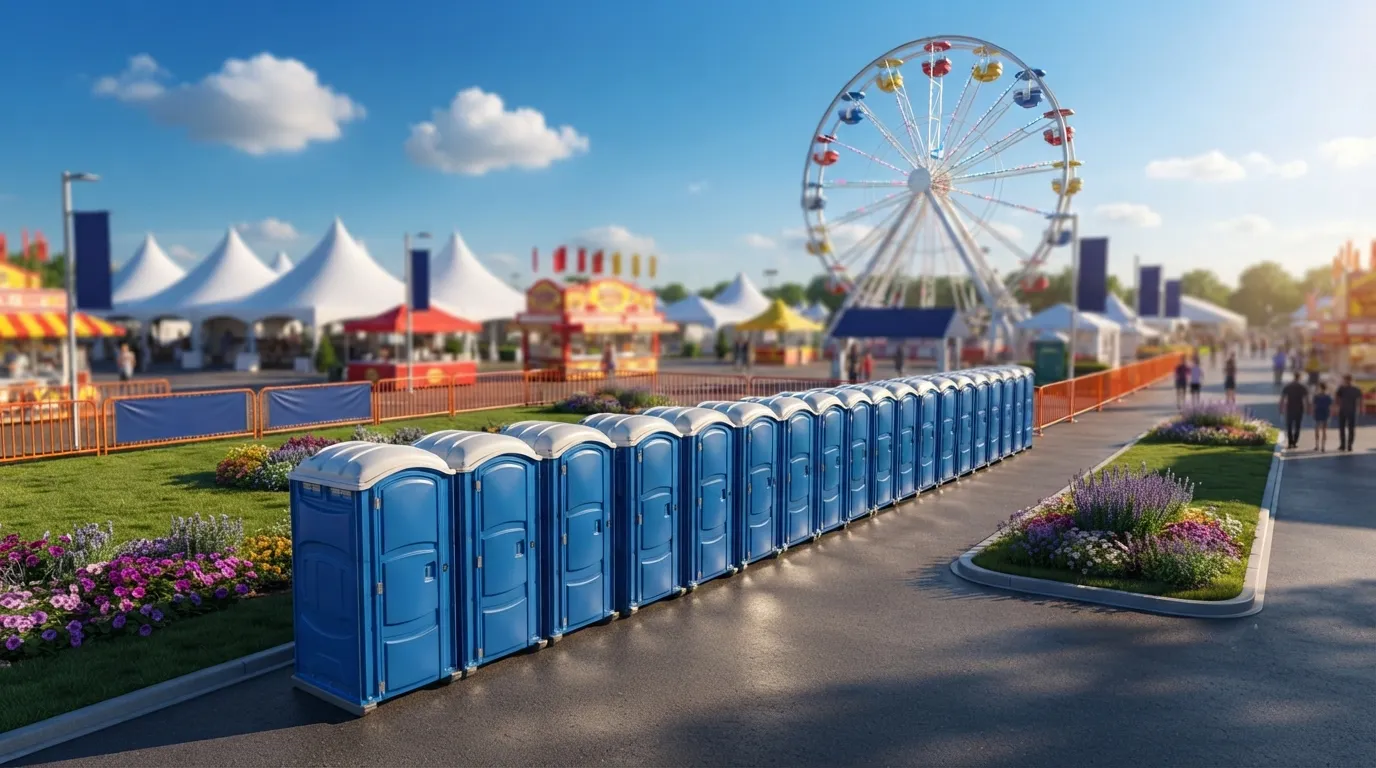
How many restrooms does a county fair need?
Fair crowds move differently than a construction crew, so the OSHA worker-count math in OSHA portable toilet requirements does not apply the same way here. For public events, planners typically size restrooms to expected attendance and hours, then add units for food courts, midways, and grandstand areas separately. Wellington Porta Pros starts every county fair quote with a walk of the grounds, because tent placement, generator runs, and fence lines from temporary fence rental all compete for the same real estate. A fair pulling several thousand people a day over a multi-day run needs restrooms clustered near entrances, food vendors, and livestock barns, not lumped in one corner of the lot. We also plan for handwashing station rental near any food service area, since fairgoers expect a sink right where they eat. Under ADA Standards section 213.2, at least 5 percent of any cluster of single-user portable units, and never fewer than one, has to be wheelchair accessible. That means a fair with 20 standard units needs at least one ADA unit on-site, and most planners round up. For an event drawing families from Royal Palm Beach, 5.7 miles northeast, or Greenacres, 10.4 miles east, extra units near parking reduce the walk for visitors carrying strollers or coolers. Read the full breakdown on how many porta potties do I need before you finalize a headcount.
What restroom options work best for a county fair?
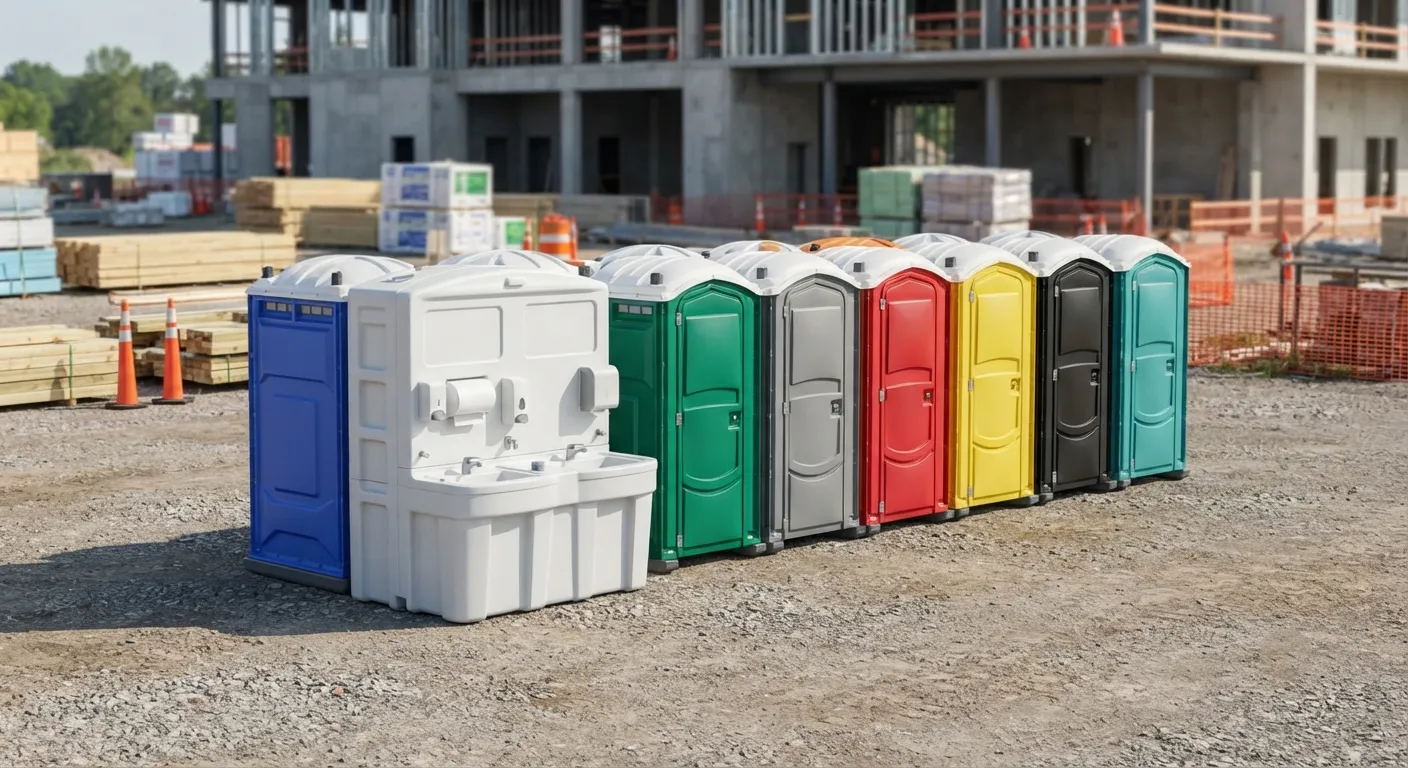
Standard units handle the midway and general grounds. Deluxe flushable porta potty units work well near VIP areas, sponsor tents, or a beer garden, since they flush and feel closer to a real bathroom. For a fair with a grandstand or a ticketed concert stage, a restroom trailer rental gives guests running water and mirrors, and a 4 stall restroom trailer or 8 stall restroom trailer moves lines faster during intermissions than a bank of standard units alone. Livestock barns and 4-H areas tend to need extra units simply because foot traffic there runs all day, not just during headline events. Wellington Porta Pros also sets up temporary fencing around generator pads and restroom clusters when a fair site has open vehicle access, since crowd flow and equipment safety both matter on a working fairground. A standard unit stands about 92 inches tall and measures roughly 44 by 48 inches on the ground, which matters when planners are laying out tight spacing between food trailers and restroom rows. For evening events, pair restrooms with light tower rental so the path stays lit after dark, and add a temporary power pole if vendors need more than a portable generator can carry.
| unit | day | week | event |
|---|---|---|---|
| standard | $100-$350 | $130-$500 | $200-$800 |
| ada | $200-$400 | $240-$400 | -- |
| deluxe | $85-$1200 | $150-$290 | -- |
| trailer | $175-$2500 | $1650-$2500 | $2499-$3899 |
Multi-day fairs usually land closer to the event or week pricing above rather than a single day rate, since delivery and pickup only happen once. See porta potty rental cost and restroom trailer rental cost for more on what drives the range.
Do county fairs need permits for portable restrooms in Wellington?
Placement on public fairground property or in a right of way needs confirming with the City of Wellington before delivery, since permit rules vary by site and event size. We have not verified a specific fee or ordinance number for fair restroom placement, so do not take a number from memory here. Check porta potty permit requirements and dumpster permit requirements if the fair also needs a roll-off dumpster rental for vendor waste and teardown debris, since large events almost always need both. Wellington Porta Pros can hold delivery until permit questions are settled, which avoids a truck showing up to a site that is not ready. OSHA 1926.51(c)(1) sets toilet ratios for construction crews, not fair crowds, but it is still the standard our crews use when a fairground has a build crew on-site before gates open. Wash stations tied to painting, coatings, or pesticide use on fairground maintenance fall under OSHA 1926.51(f)(1), which is a narrower rule than general handwashing and only applies to those specific tasks. For general fairground sanitation and crew facilities, 29 CFR 1910.141(d)(2) requires soap and towels or a hand-drying device at wash stations, not hand sanitizer alone. Ag-related fair activity, like 4-H or livestock handling, may also fall under OSHA 1928.110 if hand-labor employees are present, which sets a facility within a quarter mile walk.
How far in advance should we book restrooms for a county fair?
Book as soon as the date and site are set, ideally 60 to 90 days out for a multi-day fair, since restroom trailers and ADA units book up fastest. Standard units are easier to add late, but trailers and generator-dependent equipment need lead time.
Can we mix standard units and a restroom trailer at the same fair?
Yes, and most fairs do. Standard units cover the midway and barns cheaply, while a trailer serves grandstand or VIP areas. See event restroom rental for layout ideas that combine both.
Do fairgrounds need handwashing stations separate from restrooms?
Yes, especially near food vendors and livestock areas. A standalone portable sink rental or handwashing unit keeps lines shorter at the actual restrooms and meets expectations for food-adjacent hygiene.
What size dumpster does a county fair need?
It depends on vendor count and run length. A multi-day fair with food trucks often needs a 20 yard dumpster rental or larger; check dumpster sizes and dimensions before committing.
Will restrooms be cleaned during a multi-day fair?
Yes, service is scheduled around fair hours so units get pumped and restocked between crowd peaks, not during them. See how often are porta potties cleaned for the baseline service interval.
Next step
Get a delivery date
Tell us the address, the dates and the headcount. We size the order and confirm the route.