
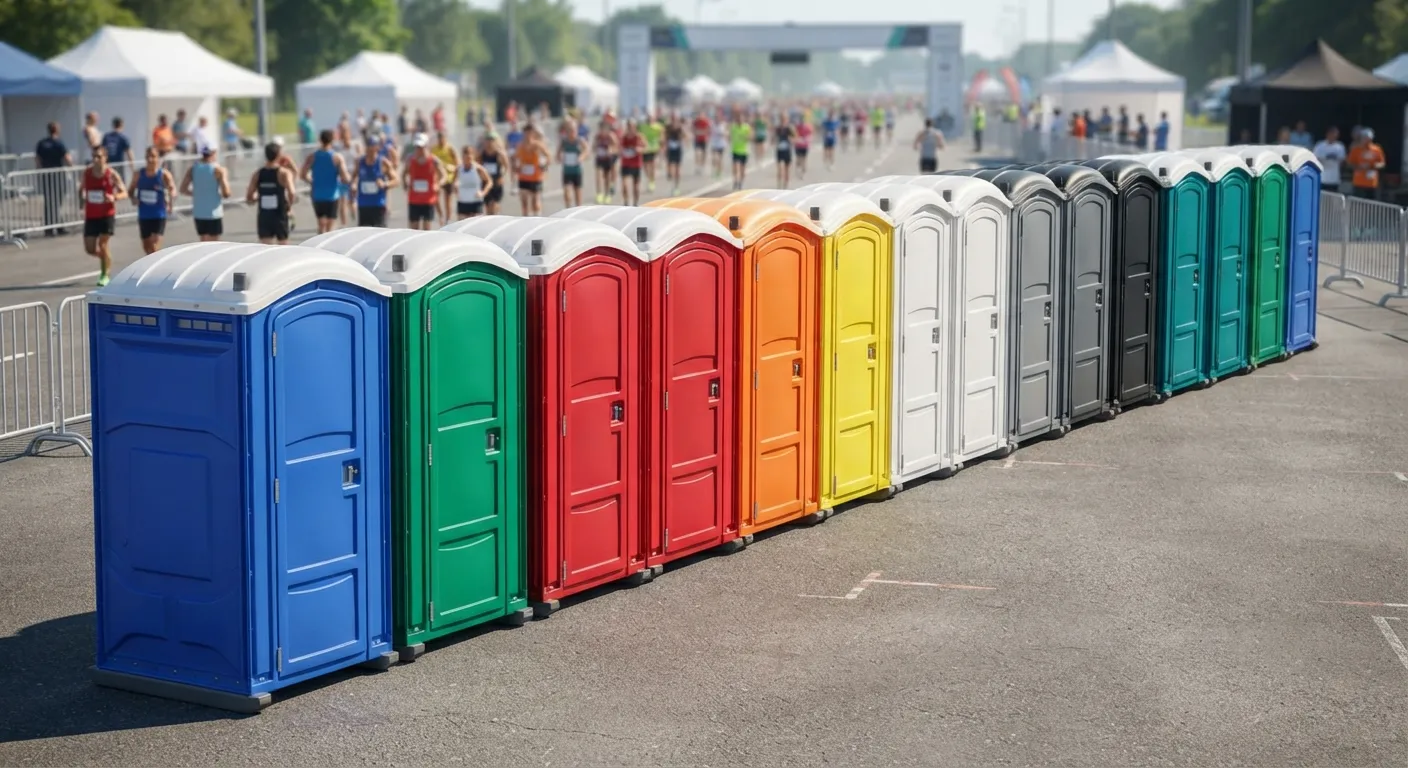
How many restrooms does a race in Wellington need?
Start with the field size and split it three ways: staging area, mile markers along the course, and the finish festival zone. A 5K with 300 runners behaves differently than a half marathon with 1,200, because the half marathon spreads people over more miles and more hours. Wellington Porta Pros typically clusters standard portable toilets near the start corral, drops single units at aid stations every couple of miles, and stacks extra capacity at the finish where runners linger for water and photos. If your race draws a mixed crowd of runners and spectators, look at event restroom rental planning rather than a pure runner count, since spectators add volume without adding bib numbers. Races with a fitness or wellness angle sometimes pair with a golf tournament restrooms layout if the course crosses club grounds. For a full breakdown of the math behind unit counts, the how many porta potties do I need guide walks through the ratios in more detail, and OSHA 1926.51(c) sets the baseline construction-site ratio of 1 toilet per 20 workers that many event planners borrow as a starting point before adjusting for crowd behavior. Courses that loop back through Wellington's central corridor can often reuse aid-station units at two points on the route, which trims the total delivery count without leaving any stretch of the course thin.
What about accessible units for runners and spectators?
ADA Standards section 213.2 requires that at least 5 percent of clustered single-user units be accessible, with a minimum of one, so any race with more than a handful of restrooms needs at least one ADA accessible porta potty at the start, at the finish, and at any major spectator gathering point. These units need a 60 inch turning circle under ADA Standards 304.3.1, and the route to reach one has to hold a 36 inch clear width per ADA Standards 403.5.1, so place them on flat, stable ground per ADA Standards 302.1, not in soft grass or gravel that shifts underfoot. Door hardware has to work with one hand and no more than 5 pounds of force under ADA Standards 309.4, which matters for spectators pushing strollers or wheelchairs through a crowd. If your race includes a VIP or sponsor area, a deluxe flushable porta potty or a small restroom trailer rental upgrades that experience without complicating the accessible unit count elsewhere on course. For races that also draw a paying spectator gate, review ADA restroom requirements early, because retrofitting accessible placement after the course map is locked costs more time than planning it in from the start.
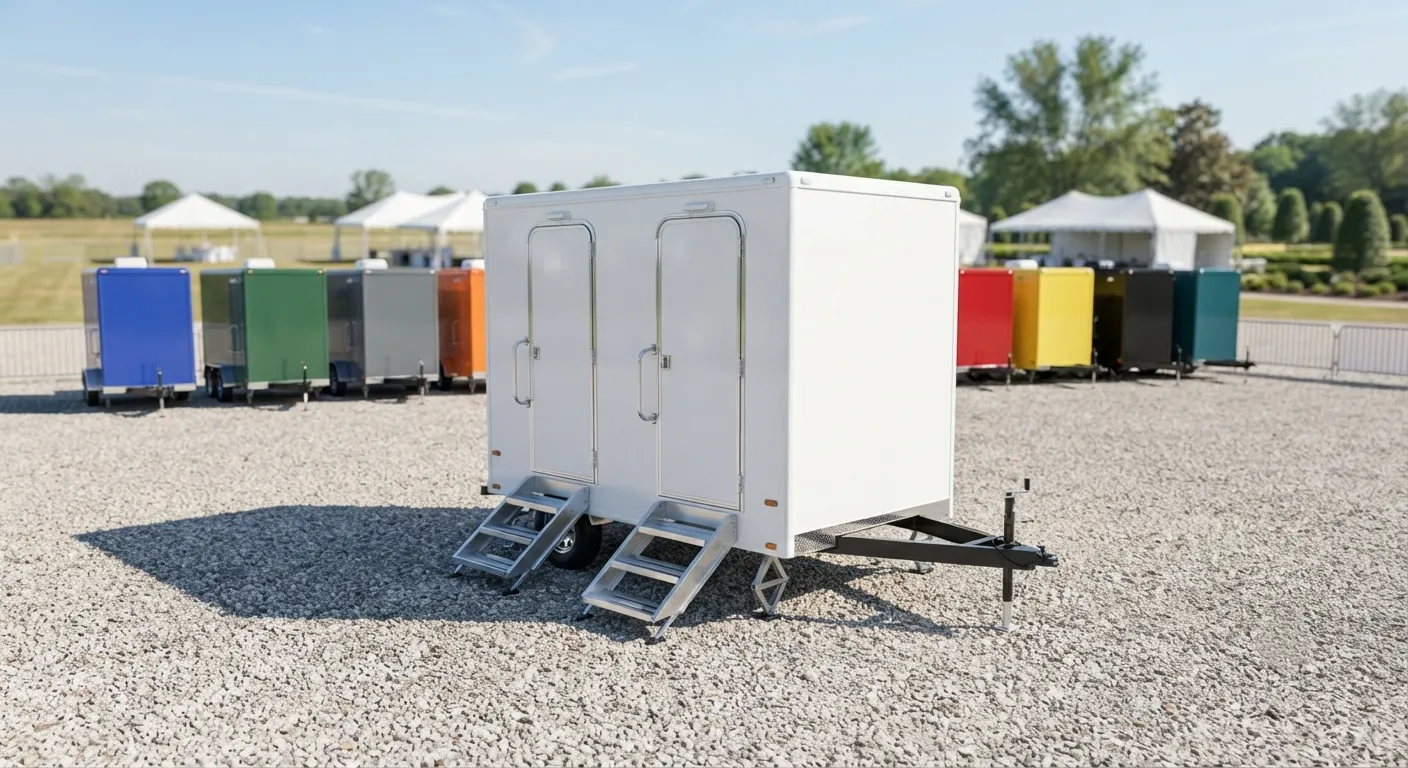
How do you handle power and lighting for an early-morning start?
Most Wellington races start before sunrise, which means light towers and a temporary power pole at the staging area, and knowing how to brace a temporary power pole correctly matters more than people expect. A pole set on soft turf without proper base plates or guy-wire anchoring can lean or fall once wind hits the timing tent or the PA speakers get hung on it, so bracing a temporary power pole means crews stake the base, run guy lines to fixed anchors, and check the pole is plumb before running any cable. GFCI protection under OSHA 1926.404(b)(1)(ii) belongs on every temporary circuit feeding timing equipment, food vendors, or the restroom trailer's interior lighting. Pair the temporary power pole with a light tower rental at the start corral so volunteers and early arrivals aren't working in the dark, and keep illumination levels in line with OSHA 1926.56(a) guidance for outdoor work areas. Runners and volunteers both need water before dawn, and OSHA 1926.51(a)(1) calls for an adequate supply of potable water at any staffed work location, which a race staging area functionally is. If your course crosses agricultural land on the way out of town, check farm and agricultural restrooms for placement near working fields.
| unit | duration | typical price |
|---|---|---|
| standard | event | $400 |
| ada | day | $230 |
| trailer | event | $3,500 |
Delivery adds a separate fee, and Wellington sits close enough to neighboring towns that crews can shuttle extra units in in the same trip if your race grows late; Royal Palm Beach is 5.7 miles northeast and Greenacres is 10.4 miles east, both within easy same-day reach. For a race-day budget breakdown, see porta potty rental cost or restroom trailer rental cost if you're adding a trailer for VIP or medical staff use.
How far in advance should we book restrooms for a race?
Book as soon as your course map and expected field size are set, ideally 60 to 90 days out for anything over 500 runners. Race weekends compete with weddings and festivals for the same trailers and ADA units, so early booking through request a quote locks your count before inventory tightens.
Can we place units along the course instead of just at start and finish?
Yes, and it's usually better. Spacing standard units every mile or two on longer courses keeps lines short and cuts the walk-off distance for runners. Talk placement through with construction site services crews who handle multi-point delivery for large layouts.
Do we need handwashing stations separate from the restrooms?
Yes, most units include hand sanitizer but not soap-and-water washing, and 29 CFR 1910.141(d)(2) requires soap and towels or a drying device where handwashing is provided. A handwashing station rental near food vendors covers that gap.
What happens if our race grows past our original headcount?
Call ahead and Wellington Porta Pros can often add units before race day, especially with a few days' notice. Keep emergency porta potty rental in mind as a backup option if registration surges late.
Should the finish line area get more units than the start?
Usually, yes. Finish areas hold people longer, with runners, families, and food tents all lingering, so portable restroom rental counts there often run higher than the start corral needs.
Next step
Get a delivery date
Tell us the address, the dates and the headcount. We size the order and confirm the route.