What do we deliver during a disaster response?
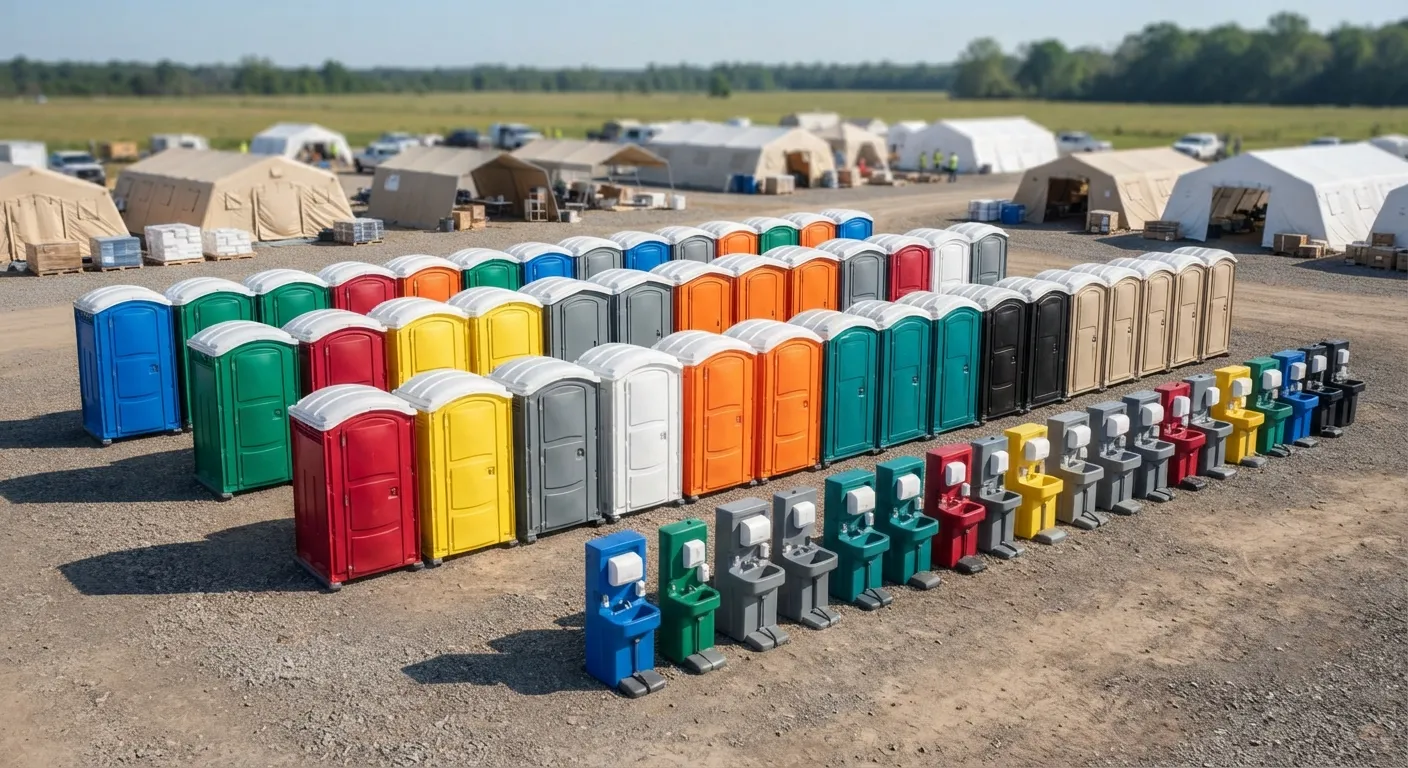
When a storm knocks out water service or a shelter fills up faster than expected, Wellington Porta Pros sends standard porta potty rental units, holding tank rental systems, and handwashing station rental setups together, because relief sites need all three at once. A standard unit holds 60 to 70 gallons in its tank and sits on a footprint of about 44 by 48 inches, small enough to place near a shelter entrance or a staging tent without blocking egress. OSHA 1926.51(a)(1) requires an adequate supply of potable water at any place of employment, which matters the moment a response crew sets up a base camp in Wellington. We also stage portable sink rental units next to toilet blocks, because 29 CFR 1910.141(d)(2) calls for soap and towels or a hand-drying device at washing stations, not hand sanitizer alone. For agencies coordinating multi-site relief, our construction site services page covers the broader equipment list, including light tower rental and temporary power pole options for camps running after dark.
How fast can Wellington Porta Pros respond to an emergency?
Emergency dispatch is built around same-window delivery once a site is confirmed safe to access. Our emergency porta potty rental service pulls from the same fleet used for construction dumpster rental jobs, so units do not sit idle waiting on a separate emergency-only inventory. Royal Palm Beach sits 5.7 miles northeast of Wellington and Greenacres is 10.4 miles east, both close enough that a second truck can reach a Wellington staging area within the same service run if a shelter needs more capacity mid-storm. We also draw on trucks positioned near Palm Springs, 12.1 miles east, when Wellington routes are blocked by debris. A roll-off delivery, useful for storm debris cleanup after the sanitation need is met, needs about 60 feet of straight clearance behind the truck, so relief coordinators should flag debris piles or downed limbs before we roll. See emergency septic service for tank pump-outs when a shelter's holding tank fills faster than planned, and disaster relief sanitation coordination often runs alongside roll-off dumpster rental for storm debris once the immediate crisis passes.
Are these units accessible for shelter residents with disabilities?
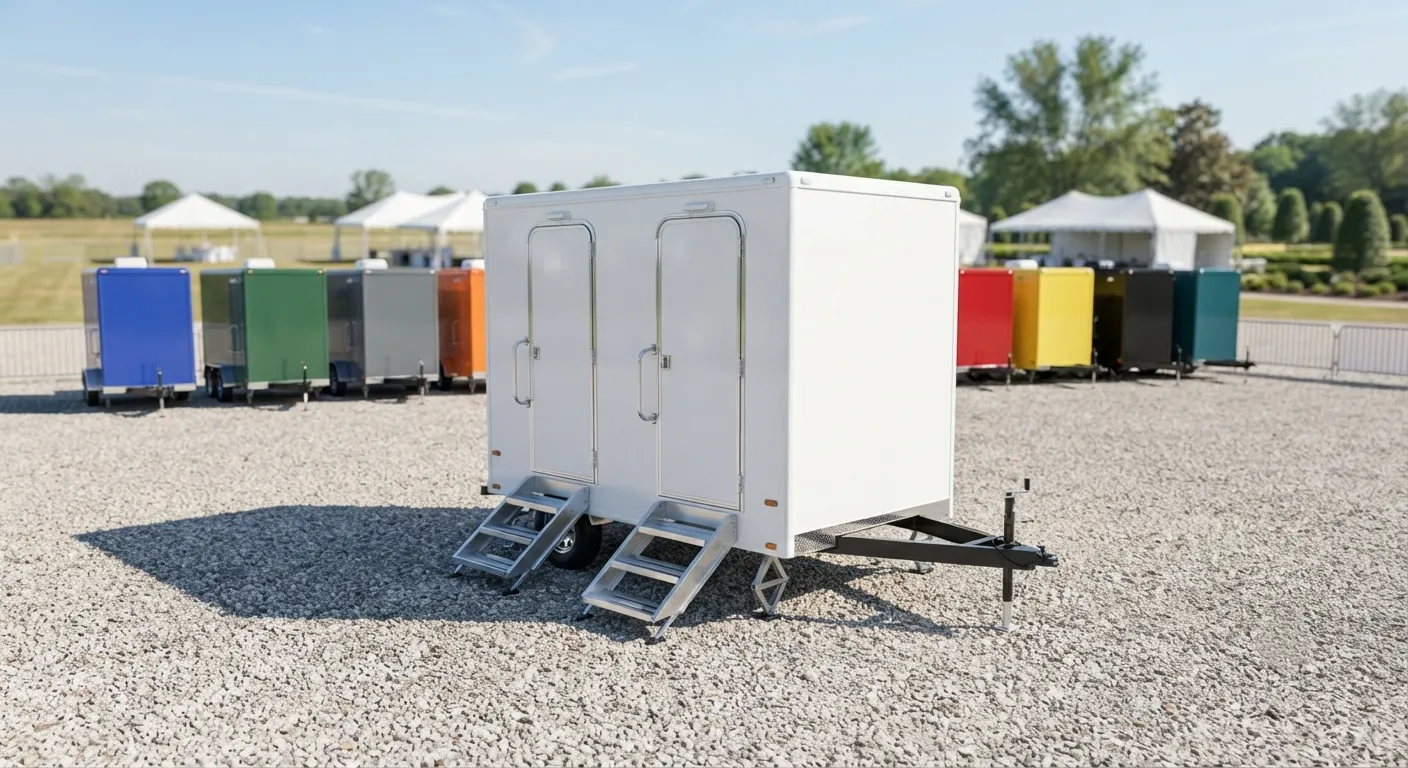
Yes, and it is not optional in a shelter setting. ADA Standards section 213.2 requires that where single-user portable units are clustered, at least 5 percent must be accessible, with a minimum of one unit regardless of cluster size. Our ada accessible porta potty units meet the 60 inch turning circle called for under ADA Standards section 304.3.1, and the door clears 32 inches per section 404.2.3, wide enough for most mobility devices. Shelter access routes should keep a 36 inch clear width under section 403.5.1, which matters when tents, cots and toilet units all compete for the same footprint. We price these by the day or week rather than forcing a long-term commitment nobody can plan around during an active response; see porta potty rental cost for how daily and weekly rates compare across unit types.
| unit | day | week |
|---|---|---|
| standard | $100 - $350 | $130 - $500 |
| ada | $200 - $400 | $240 - $400 |
| deluxe | $85 - $1,200 | $150 - $290 |
Toilet counts still follow OSHA 1926.51(c)(1): one facility per 20 workers on a response crew, scaling up as headcount grows. Shelter population counts run differently, so coordinators should plan ratios with the shelter operator directly rather than assume a construction-site formula applies one for one. For agricultural staging areas near Wellington, OSHA 1928.110 sets a similar bar, one facility per 20 hand-labor employees, within a quarter mile walk, which is worth knowing if farm crews are pulled into relief work.
Storage matters too. A storage container rental unit keeps donated supplies dry and secured overnight, and a 20ft storage container fits most shelter donation intake without needing a full parking lot. If the response stretches past the first week, our monthly porta potty rental rate keeps costs predictable for agencies managing FEMA reimbursement paperwork or county budgets. Temporary fencing also gets requested often at Wellington staging sites; a temporary fence rental keeps foot traffic organized around donation drop points, and crowd control barrier rental does the same for shelter entrances during high-volume intake hours.
How many toilets does a shelter of 100 people need?
There is no single OSHA shelter ratio, since 1926.51(c)(1) covers construction crews, not sheltered residents. Most emergency management plans scale from a similar baseline, roughly one unit per 20 to 25 people for short stays. Talk to your shelter operator and see how many porta potties do i need for the math.
Can you deliver before a storm makes landfall?
Yes, if roads are still passable and the site is accessible. We stage units ahead of forecasted storms when possible. Once winds pick up past safe driving conditions, delivery has to wait until the storm clears the area.
Do you provide handwashing stations separate from toilets?
Yes. handwashing station rental units come standalone or paired with toilet blocks. 29 CFR 1910.141(d)(2) requires soap and towels at wash stations, which we stock standard on every unit.
What if the shelter site has no water or power hookup?
That is the normal case in disaster response. Our units are self-contained and need no hookup. Pair them with a portable sink rental unit for handwashing without needing plumbing.
How do we get billed during a federally declared disaster?
Billing follows standard day, week or month rates depending on deployment length; see request a quote for documentation agencies often need for reimbursement claims tied to the response.
Next step
Get a delivery date
Tell us the address, the dates and the headcount. We size the order and confirm the route.