Where should a porta potty go on a Wellington job site or event?
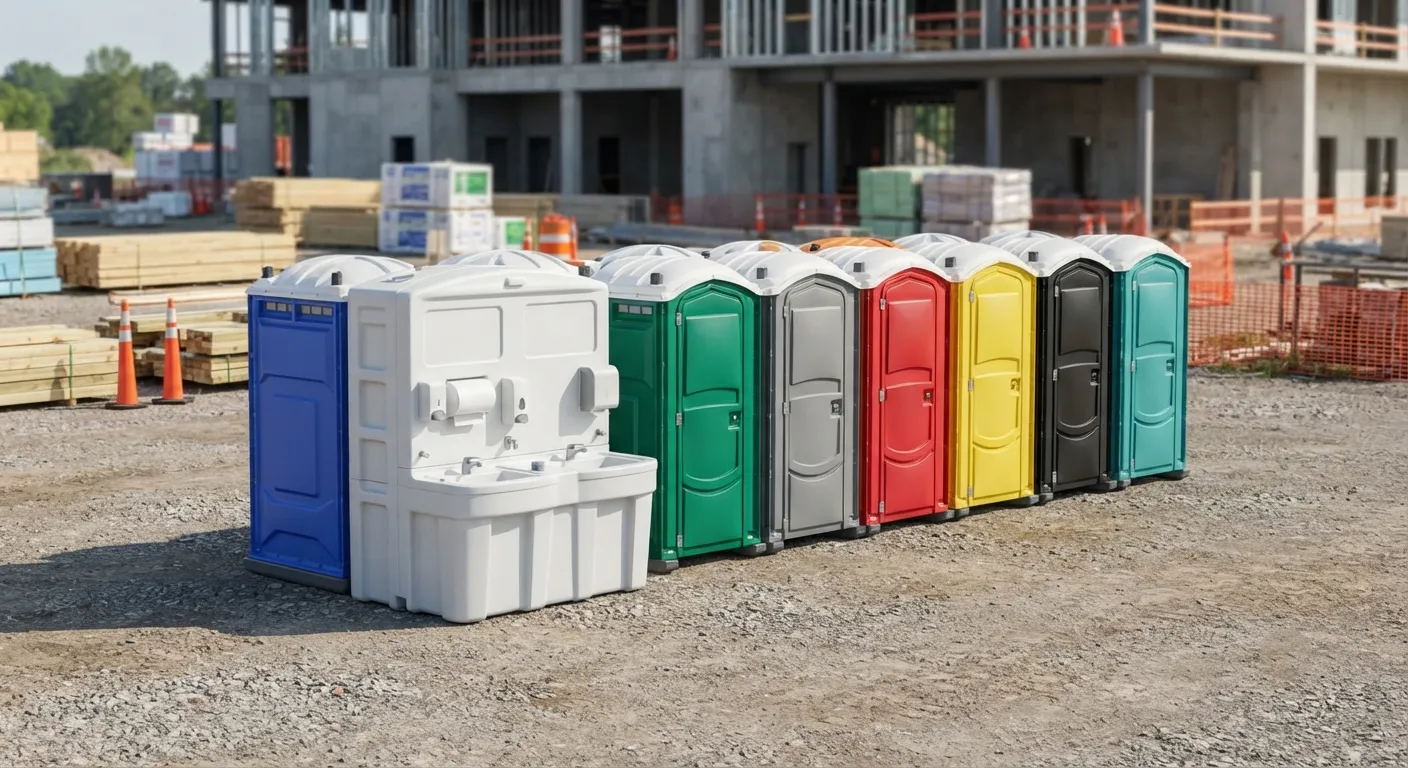
Pick flat, stable ground first. ADA Standards section 302.1 calls for surfaces that are stable, firm and slip resistant, and that rule of thumb applies even to a standard unit that does not need to meet accessibility code. Keep units away from storm drains, low spots that pond after rain, and soft sod that will rut once the service truck drives in. A standard porta potty rental measures about 44 by 48 inches on the ground and stands roughly 92 inches tall, so give it a footprint with a little breathing room, not a tight gap between a fence and a dumpster. If you are placing units for a crew, our porta potty placement guide pairs well with how many porta potties do I need to get the count and the layout right at the same time. For events near Royal Palm Beach, 5.7 miles northeast of Wellington, or Greenacres, 10.4 miles east, the same clearance rules apply, just plan the walk distance from parking to restrooms so guests are not crossing a live work zone.
What are the porta potty placement rules for construction sites?
The core porta potty placement rules are about worker access and truck access, not just tidiness. OSHA 1926.51(c)(1) sets the ratio: one toilet for 20 workers or fewer, then one toilet and one urinal per 40 workers up to 200. That means placement has to account for a growing crew, not just day one headcount. Keep the service door facing an open lane so the pump hose reaches the tank without threading through material stacks or scaffolding. A roll-off delivery needs about 60 feet of straight clearance behind the truck, and if you are staging a construction dumpster rental near your restrooms, plan both footprints together so neither blocks the other's service access. If your site sits in the public right of way, placement there needs confirming with the City of Wellington before delivery, since right-of-way rules vary and were not something we could verify for this page. Keep an ADA unit in the mix too; ADA Standards section 213.2 requires at least 5 percent of clustered units to be accessible, never fewer than one.
Does a dumpster placement permit cost extra in Wellington?
A dumpster placement permit cost, when one applies, depends on where the container sits and how long it stays, and that detail comes from the City of Wellington rather than from us. We were not able to verify a specific dumpster placement permit fee for this page, so treat any number you hear as a starting point and confirm it directly with the city before you schedule delivery. What we can tell you is the container pricing side: a 10 yard dumpster rental or 20 yard dumpster rental runs on daily, weekly and monthly terms, and placement on a driveway or private lot usually avoids permit questions entirely. Street placement is the trigger point most cities care about. Check dumpster permit requirements before you commit to a curb spot, and pair that with dumpster weight limits so the container you place is sized right the first time, not swapped mid-job.
How much clearance does a restroom trailer need for placement?
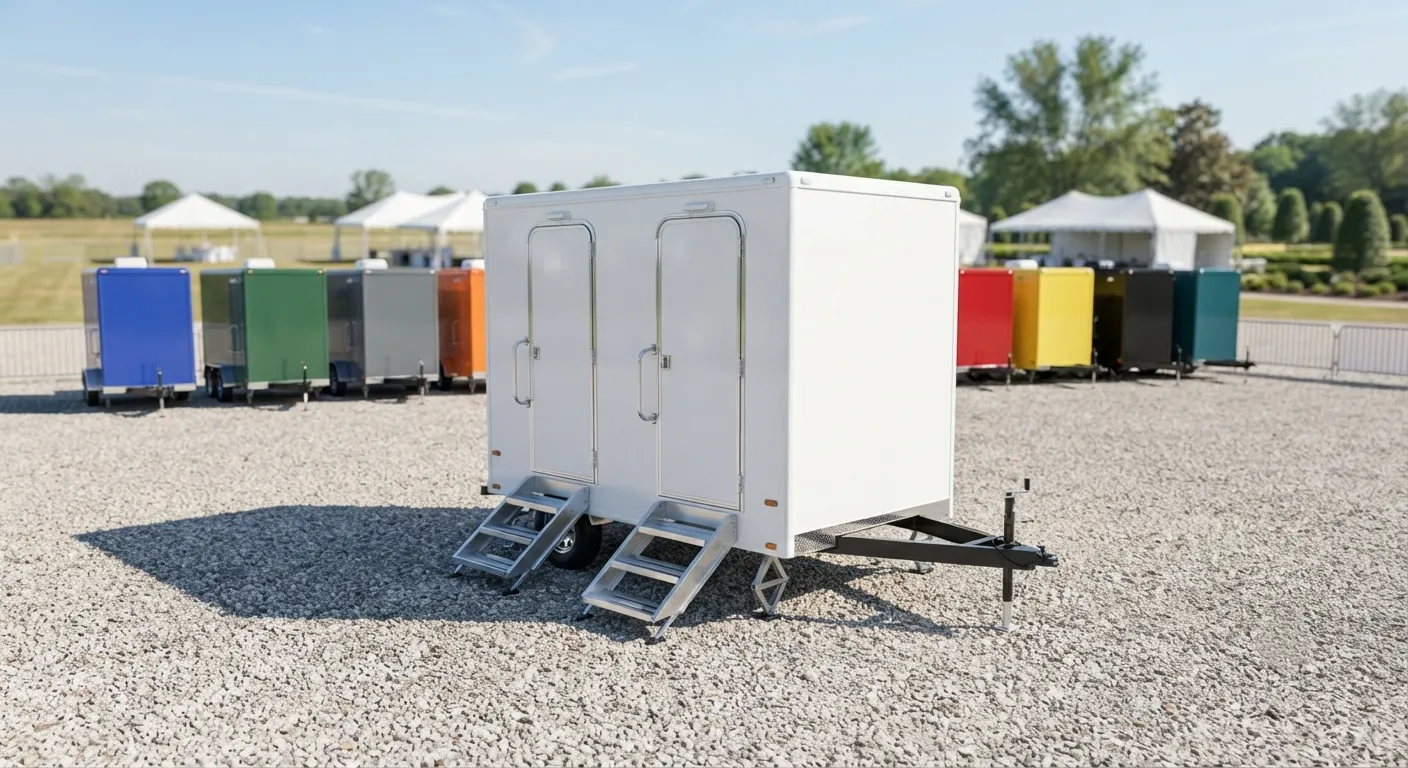
A restroom trailer needs level, compacted ground plus enough approach length for the delivery vehicle to back straight in, similar to the 60 feet a roll-off truck needs behind it. Trailers also need a power source, usually a standard outlet or a small generator, and a water hookup or full tank depending on the model. A 2 stall restroom trailer is compact enough for tight residential driveways, while an 8 stall restroom trailer needs a genuinely open lot, the kind you'd find at a fairground rather than a backyard. If your event is near Palm Springs, 12.1 miles east of Wellington, or Lake Worth Beach, 16.1 miles east, factor that drive into your delivery window when you book. Door swing matters too: ADA Standards section 404.2.3 sets minimum clear door opening width at 32 inches, and a luxury restroom trailer generally exceeds that by design. For septic-side setup, a septic pumping service needs the same straight-line access as a delivery truck, so plan trailer and tank placement together rather than as an afterthought.
| unit | day | week | month |
|---|---|---|---|
| standard | $100-$350 | $130-$500 | $125-$325 |
| ada | $200-$400 | $240-$400 | - |
| deluxe | $85-$1200 | $150-$290 | - |
Can I move a porta potty once it's placed?
Yes, but call first. Moving a unit yourself can crack the tank seal or tip it before it's been pumped, and Wellington Porta Pros can usually reposition a unit same week for a small fee. If the ground has changed, muddy after rain, for instance, we will recheck stability before moving it.
What if my site has no flat ground at all?
We use leveling boards or gravel pads on sites with a slight grade. On steep or uneven lots, we will walk the site with you first. This matters most for ADA accessible porta potty units, which need a stable approach per ADA Standards section 302.1.
Do storage containers or mobile office trailers need special placement?
Yes. A storage container rental or mobile office trailer rental needs a hard, level pad, ideally gravel or asphalt. If a trailer door needs replacing mid-rental, mobile office trailer replacement doors are handled through our maintenance line, not a DIY swap.
Can I place a handwashing station anywhere on site?
Place it near the work area, not far from the toilets. 29 CFR 1910.141(d)(2) requires soap and towels or a drying device at wash stations. If crews are applying paints or coatings, OSHA 1926.51(f)(1) requires washing facilities for that specific work.
Does temporary fencing affect where I can place a porta potty?
Yes, plan them together. A temporary fence rental around a site perimeter should leave a gate wide enough for service trucks, and units placed inside a chain link temporary fence still need that same clear service-side approach.
Next step
Get a delivery date
Tell us the address, the dates and the headcount. We size the order and confirm the route.