How many porta potties do I need?
Start with headcount and duration, not guesswork. OSHA 1926.51(c) sets the baseline for construction sites: one toilet for 20 workers or fewer, then one toilet seat and one urinal per 40 workers once you pass 20, and per 50 workers once you hit 200 or more. Farms and agricultural operations fall under a different rule, OSHA 1928.110, which asks for one facility per 20 hand-labor employees within a quarter mile walk. Events run on a different math entirely, driven by guest count and how many hours people are drinking. If you're not sure which bucket you're in, our full breakdown of unit counts walks through construction, farm and event scenarios side by side, and the OSHA portable toilet requirements page covers the ratio table in more detail. Service frequency matters too. ANSI/PSAI Z4.3, the industry standard for portable sanitation, sets one service visit per week as the baseline for up to 10 users over a 40 hour week. Heavier use in Wellington's summer heat usually means bumping that up.
What type of unit fits the job?
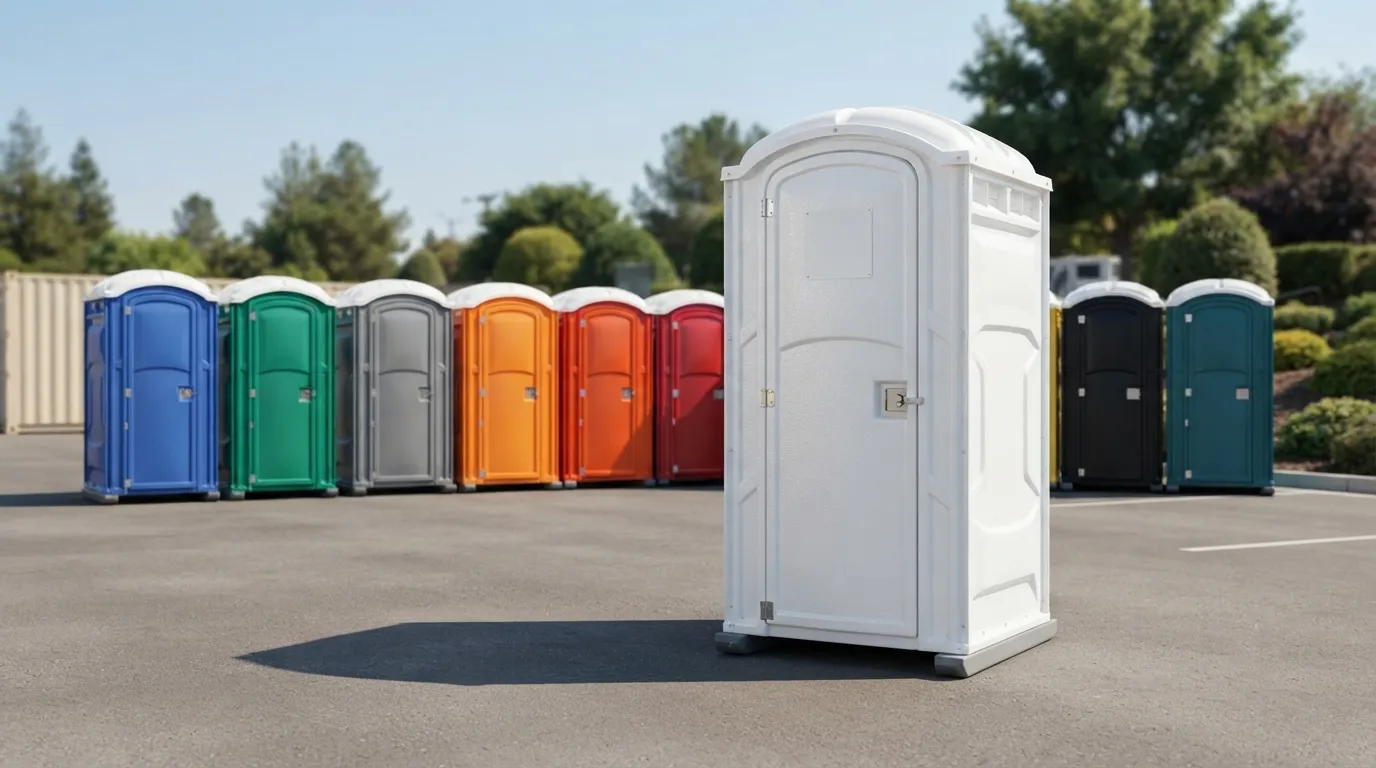
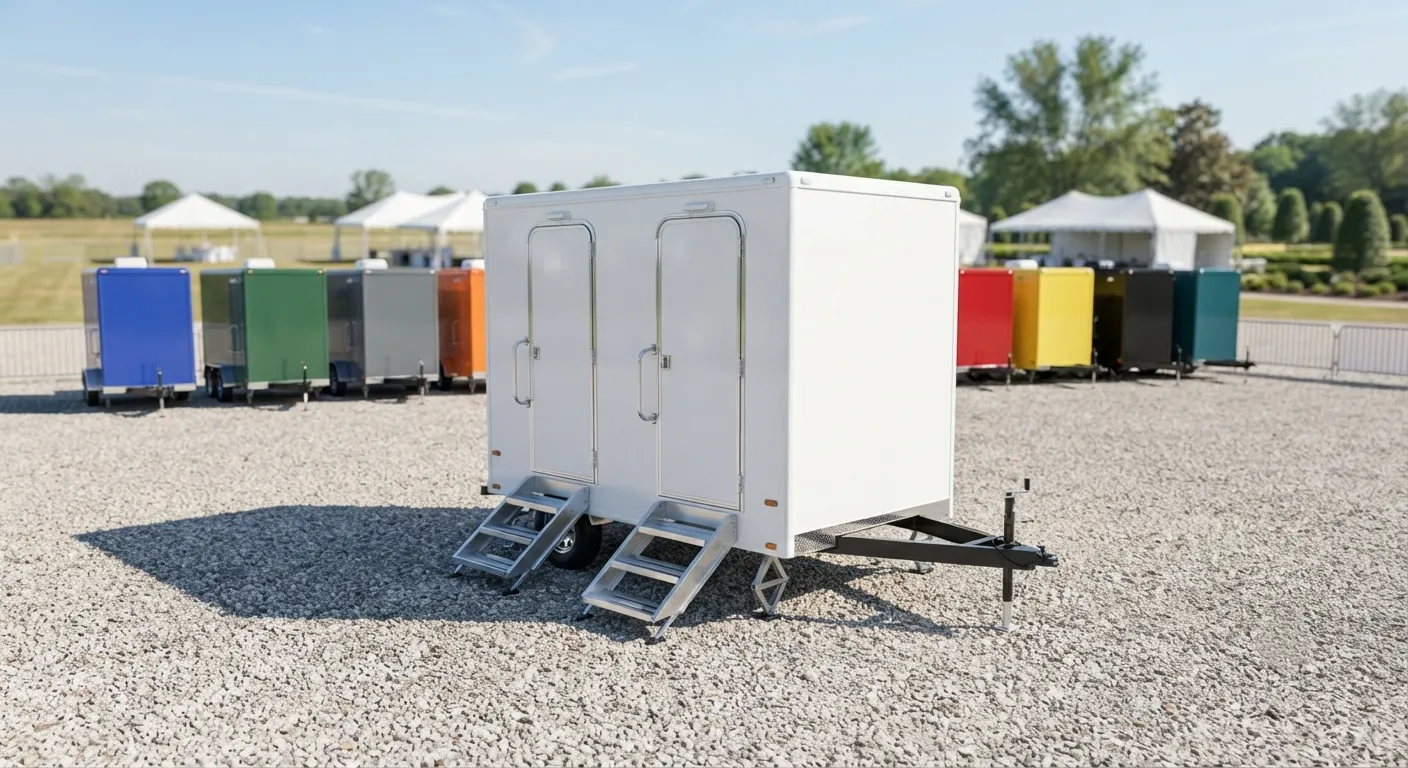
A standard porta potty rental is the workhorse: about 44 by 48 inches on the ground, 92 inches tall, with a 60 to 70 gallon holding tank. That covers most construction sites and casual outdoor gatherings. For weddings, corporate events or anything with dressed-up guests, step up to a deluxe flushable porta potty or a full restroom trailer rental with sinks and mirrors. If you expect guests using wheelchairs or mobility devices, an ADA accessible porta potty is not optional at most public events. ADA Standards section 213.2 requires that where single-user units are clustered, at least 5 percent be accessible, with a minimum of one unit no matter how small the cluster. That accessible unit needs a 60 inch turning circle under section 304.3.1, a 32 inch clear door opening under section 404.2.3, and a stable, slip-resistant surface underneath per section 302.1. For agricultural sites or remote lots without easy servicing, a holding tank rental or portable sink rental rounds out the plan.
Where should units go on site?
Placement decides how well the whole rental works. Units need firm, level ground, so gravel or a compacted pad beats soft turf every time. Keep the route to each unit at least 36 inches wide to satisfy ADA Standards section 403.5.1, and make sure ramps, where used, don't exceed a 1:12 slope under section 405.2. Service trucks need room too. A pump-out truck typically needs clear access, and if you're also renting a roll-off dumpster rental for the same job, plan on roughly 60 feet of straight clearance behind the truck for delivery. Lighting matters after dark: OSHA 1926.56(a) sets minimum illumination levels for construction areas, so pair units near active work zones with a light tower rental if the site runs into evening hours. If the unit sits anywhere near a public sidewalk or right-of-way in Wellington, confirm placement with the city before delivery day, since right-of-way rules vary and this needs direct confirmation rather than assumption. The porta potty placement guide covers ground conditions and clearance in more depth, and the porta potty permit requirements page is the place to start on any approval questions.
Do I need handwashing stations too?
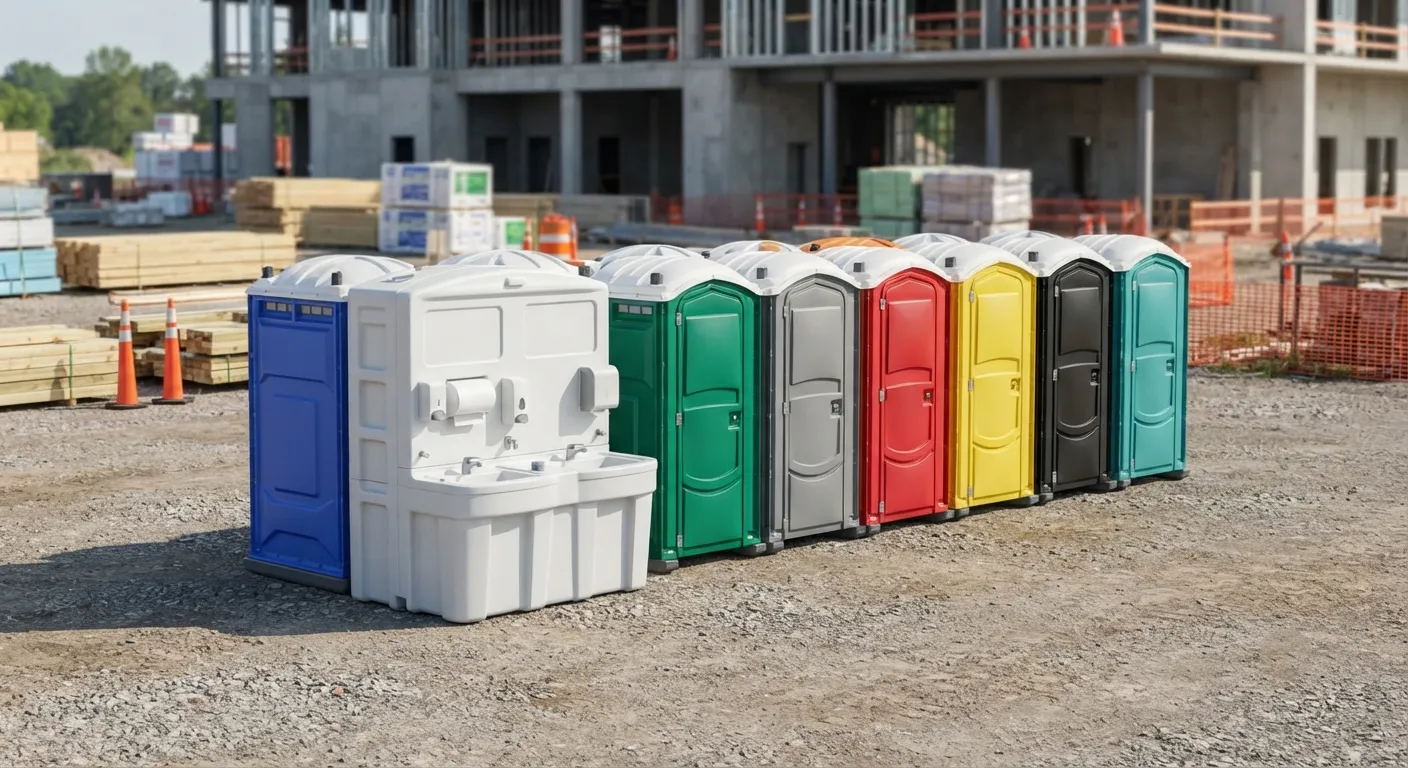
Yes, on almost every job and event. 29 CFR 1910.141(d)2 requires washing facilities to include soap and towels or a hand drying device; hand sanitizer alone does not satisfy that rule. If workers on your Wellington site are applying paints, coatings, herbicides or insecticides, OSHA 1926.51(f)(1) requires actual washing facilities for that contaminant exposure specifically, not a general handwashing mandate. A handwashing station rental or hand sanitizer station rental solves both cases depending on the work. Food vendors at events should also plan for a grease trap pumping if there's any cooking involved, since a grease interceptor needs pumping once fats, oils, grease and solids reach 25 percent of the liquid depth. Full requirements are covered on the handwashing requirements page. Renting a standard unit runs in the range covered on the porta potty rental cost page, and if the job runs long, monthly porta potty rental pricing is worth comparing against a string of short-term rentals.
| Duration | Price band |
|---|---|
| Day | $100 to $350 |
| Week | $130 to $500 |
| Month | $125 to $325 |
| Weekend | $125 to $400 |
How far in advance should I book a porta potty in Wellington?
Two to three weeks ahead for most jobs, longer for weekend events near Royal Palm Beach or other nearby towns where demand overlaps. Emergency situations are different: emergency porta potty rental can often turn around same-day or next-day depending on unit availability.
What size dumpster pairs with a construction porta potty order?
Depends on the debris volume. Most residential jobs use a 10 yard dumpster rental, while larger builds need a 20 yard dumpster rental or bigger. Check dumpster sizes and dimensions before ordering.
Do event rentals need more units than construction sites?
Often yes, per person. Construction follows OSHA 1926.51(c) ratios tied to steady headcount over a shift. Events pack more people into fewer hours with less predictable bathroom timing, so event restroom rental planning usually rounds up.
Can I rent a storage container alongside portable restrooms?
Yes. Many Wellington job sites combine both. A storage container rental keeps tools secure while restrooms handle crew needs, and pricing details are on the storage container rental cost page.
What if my site also needs temporary fencing?
Common pairing for construction and events alike. A temporary fence rental secures the perimeter while restrooms and dumpsters sit inside it; see temporary fence cost for pricing ranges.
Next step
Get a delivery date
Tell us the address, the dates and the headcount. We size the order and confirm the route.